Rent and Brand Alignment in Premium High-Street Retail Spaces | Beşiktaş – Nişantaşı
Explore the rental potential, brand suitability, and strategic real estate asset management of premium high-street retail spaces in Beşiktaş Levent Çarşı, Nisbetiye Street, and Nişantaşı Teşvikiye.
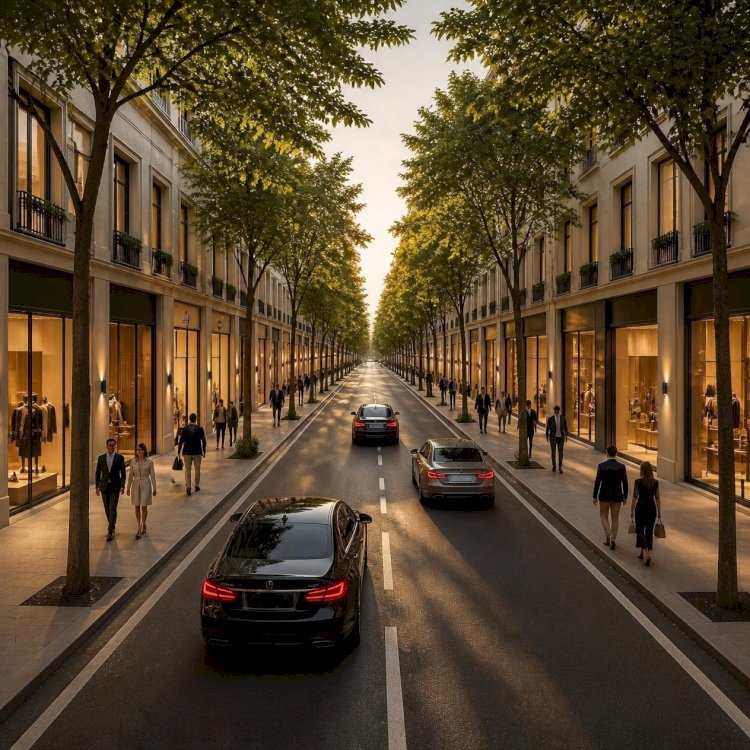
In the process of leasing real estate, there is often a significant, yet frequently overlooked, cost: the period during which the property remains vacant.
When leasing a premium retail space—for instance, on a high-street location in areas like Levent Çarşı, Nisbetiye Street, or Teşvikiye in Nişantaşı—a property owner’s sole focus should not be securing the highest possible rent. While rental income is a fundamental factor in determining the value of a commercial property, it is not the only consideration.
The primary focus should instead be on achieving a sustainable rental yield, identifying the right tenant profile, and implementing a leasing strategy that preserves the long-term value of the property.
Ultimately, success in the premium commercial real estate sector is not merely about demanding high rent; it is about aligning the right business model with the ideal location, managing the risk of vacancy, and ensuring the property’s income-generating capacity remains sustainable.
1. Apparent Value: Street, Frontage, Square Footage, and Rental Price
When evaluating premium street-level retail spaces, the primary factors typically considered are location, square footage, frontage width, storefront visibility, and the requested rental price.
However, the commercial potential of two retail units—even those located on the same street or in close proximity to one another—can differ significantly.
A unit’s corner positioning, its visibility relative to pedestrian flow, the elevation of its entrance, the layout of its storefront, the usability of its interior space, and its suitability for a specific retail concept can all influence a potential tenant’s decision.
For this reason, in areas of high commercial activity and significant brand visibility—such as Levent Çarşı in Beşiktaş, Nisbetiye Street, or Teşvikiye in Nişantaşı—relying solely on square footage or the asking prices of other local listings is insufficient for a proper assessment.
The requested rental price alone does not establish the market value of a property. To arrive at an accurate valuation, one must holistically consider the characteristics of comparable properties, competing retail spaces on the market, verifiable data from completed lease transactions, and feedback from potential tenants.
2. The Unseen Value: The Nature of Pedestrian Traffic and Brand Alignment
Pedestrian density on a street does not, in itself, guarantee commercial success. What truly matters is the extent to which this foot traffic aligns with the target customer base.
A premium fashion brand, a restaurant, a design boutique, or an exclusive service provider may each derive value from the same location, yet for different reasons. Every business model entails a unique customer profile, specific requirements for visibility, distinct space needs, and particular operational demands.
In this context, "brand alignment" emerges as a crucial criterion for evaluating premium commercial real estate.
For instance, the fact that a retail space in Teşvikiye, Nişantaşı, is well-suited for a specific retail concept does not mean that the same space would be equally productive for any other type of business. Similarly, when assessing the potential of a retail space in areas like Levent Çarşı in Beşiktaş or Nisbetiye Street, one must look beyond the mere recognition of the location and consider the surrounding commercial landscape and the target demographic.
For a property owner, the critical question is:
For which brand or business model is this space valuable, and why?
The answer to this question helps in identifying the right prospective tenants, focusing marketing efforts, and arriving at a more precise assessment of the property’s commercial potential.
3. The Property Owner’s Strategic Decision: Highest Rent or Sustainable Tenancy?
For a property owner, a high rent offer is certainly significant. However, evaluating such an offer from an economic perspective should not be based solely on the monthly rent amount.
Factors such as a prolonged leasing process, loss of income during vacancy periods, expenses incurred to prepare the property for a new tenant, and the long-term sustainability of the tenancy can all impact the total return.
Therefore, it is necessary to compare two different leasing scenarios:
High rent, long vacancy: Pursuing a higher rent expectation, which may result in a longer wait to find a suitable tenant.
Market-aligned rent, faster leasing: Aiming to reduce the risk of income loss through realistic pricing and finding the right tenant match.
For instance, a retail space that remains vacant for six months while the owner holds out for a monthly rent of 500,000 TL might yield a different total financial performance if it were leased sooner at 450,000 TL per month. The definitive outcome of such a comparison depends on the actual lease commencement date, the duration of the contract, associated costs, and the terms for future rent increases.
The objective here is not to suggest that one should always seek lower rent; rather, it is to evaluate the relationship between rent expectations and the time required to secure a tenant, in the context of the property’s overall economic performance.
The optimal decision can only be reached by analyzing a combination of factors: the property’s specific characteristics, market demand, competing supply, the tenant profile, and the investor’s own income objectives.
4. Strategic Real Estate Asset Management: Accurate Pricing, the Right Tenant, and the Right Lease Agreement
Generating sustainable income from premium high-street retail properties requires a more comprehensive approach than simply posting an advertisement and accepting one of the offers received.
Within the framework of strategic real estate asset management, the leasing process should be addressed through four key pillars:
Accurate pricing: Developing a realistic rental strategy based on the property’s physical characteristics, its micro-location, comparable rental spaces, and verifiable market data.
The right tenant profile: Identifying brands or businesses that align with the property’s physical conditions, its commercial environment, and the target customer base.
Managing vacancy risk: Monitoring feedback throughout the leasing process, assessing the level of demand, and—when necessary—making controlled adjustments to pricing or marketing strategies.
The nature of the lease agreement: Evaluating terms such as the lease duration, rent escalation clauses, permitted use, maintenance and operational obligations, and the respective responsibilities of the parties, ensuring they are tailored to the property’s specific features and current legal regulations.
This approach aims not only to complete a single leasing transaction but also to consider the property’s income-generating capacity alongside long-term investment objectives.
What Should a Premium Retail Investor in Beşiktaş and Nişantaşı Ask?
For those investing in or looking to lease out properties in areas with distinct commercial characters—such as Beşiktaş’s Levent Çarşı, Nisbetiye Street, or Nişantaşı’s Teşvikiye—the evaluation process must go beyond the general perception of the neighborhood.
When assessing a premium commercial property, the following questions can serve as a guide:
To what extent is the requested rent in line with alternatives that share similar characteristics?
What types of business models are supported by the shop’s frontage, visibility, and physical attributes?
Does the pedestrian foot traffic in the location align with the target customer profile?
How well do the requirements of potential tenants match the current state of the property?
Has the impact of a higher rent expectation—in terms of potential vacancy periods and other associated costs—been calculated?
Does the leasing strategy address both the owner’s short-term income needs and their long-term investment goals?
The answers to these questions may reveal a unique strategy for each property. In the realm of premium commercial real estate, there is no "one-size-fits-all" approach to pricing or leasing; decisions must be tailored to the specific characteristics of the property and prevailing market conditions.
Conclusion: In Premium Commercial Real Estate, Value Is Sustained Through the Right Tenant
The true potential of a premium street-level retail space is not defined solely by the prestige of its neighborhood, its square footage, or the rent being asked.
Factors such as the nature of the location, physical features, target customer base, brand alignment, potential vacancy duration, and the terms of the lease agreement must all be evaluated in conjunction with one another. For a property owner, the primary objective is not merely to demand the highest possible rent, but to develop a leasing strategy that aligns with market realities, ensures sustainability, and supports broader investment goals.
In the realm of premium commercial real estate, true value is determined not just by the street on which a property is located, but by the extent to which that specific location can generate value for a given business model.
Ozkan Ozel
Strategic Real Estate Asset Management
Besiktas / Istanbul
besiktasticarigayrimenkul.com.tr/en
What's Your Reaction?